
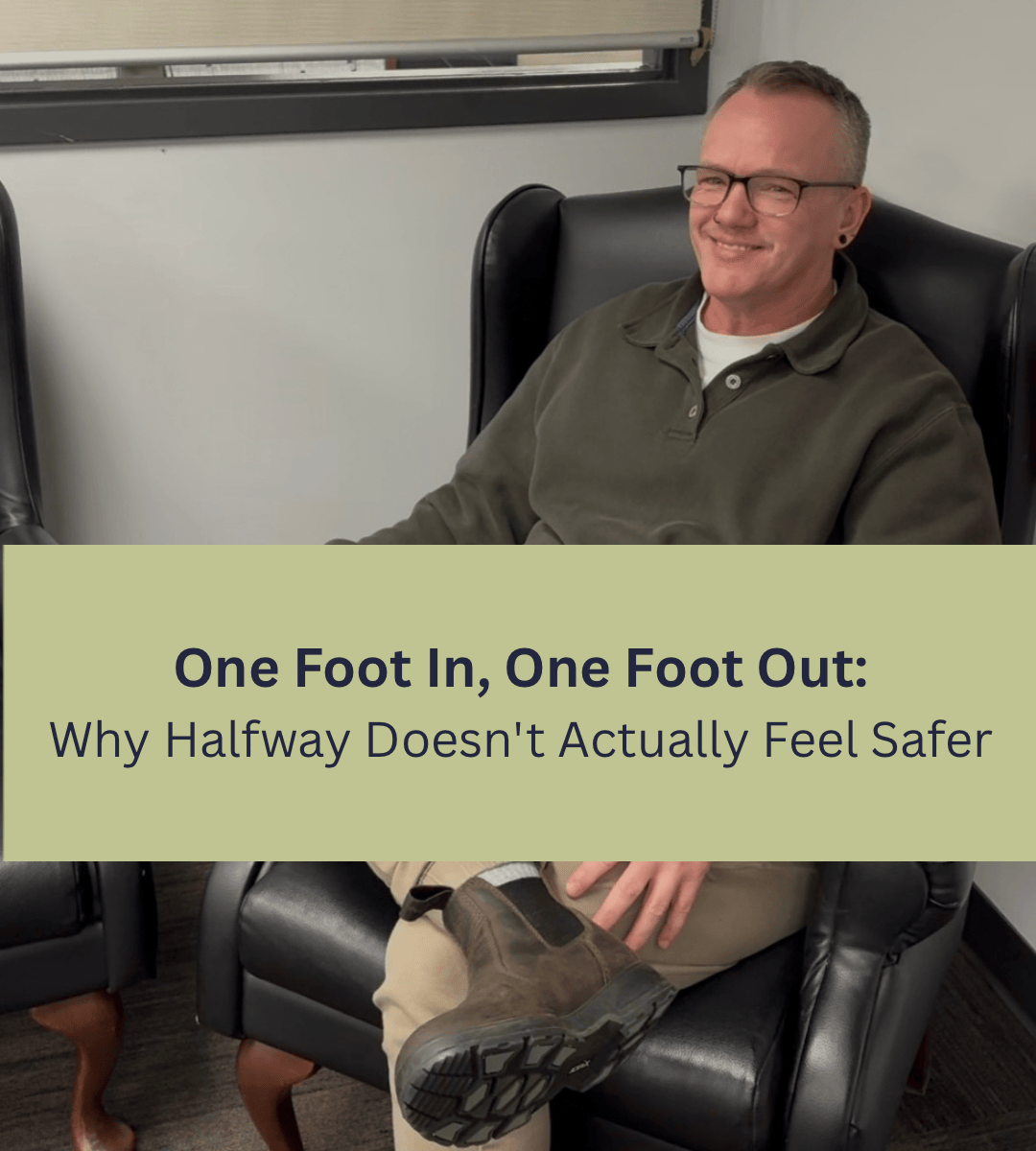
Yesterday I was catching up with someone over coffee, and we got talking about how my kids experienced my coming out and transition. I have five kids. My younger three were all under six when I started socially transitioning, so for them this is basically just who I’ve always been. But my older two were 18 and almost 20 when I came out. They had a lived history with the person I used to present as. They had to actually make a shift.
My 18 year old at the time was already queer and had a lot of knowledge about queerness and even some about transness, which helped. But as I talked it through over coffee, I realized what actually made the difference for our family wasn’t that I had it all figured out or that I eased them in gently. It was that once I made the decision, I was all in. I needed them to be all in too. We took small steps forward, the way any family does with something new and unfamiliar, but we were all in, going forward together, as a new queer family.
That conversation cracked something open for me. Because I see so many queer and trans folks doing the opposite. Not because they’re doing anything wrong. Because halfway feels safer. And I want to talk about why it isn’t.
The Place a Lot of Us Get Stuck
There’s a specific kind of stuck I see constantly in my coaching practice, and I lived it myself before I transitioned. It’s not being closeted. It’s not being fully out either. It’s the space in between. One foot in a life that’s authentically yours. One foot still in a life that’s cis assumed, straight assumed, safe assumed.
Out to some people, not others. Yourself at home, someone else at work. Living your truth on the weekends and performing an old version of yourself the rest of the week. Technically out, but still shrinking, still softening, still leaving yourself an exit in case it all goes wrong.
Sometimes that’s fear talking. But sometimes it isn’t fear at all, it’s an accurate read of the room. A parent who’s still working through it. A workplace that talks a good game but hasn’t proven it yet. In those spaces, holding part of yourself back isn’t dishonesty. It’s you managing a real risk while the people around you catch up to who you actually are, and that’s a genuinely different thing from hiding.
I understand the impulse completely. Halfway feels like it’s giving you control. Like you get to test the water without committing to the whole ocean. Like you’re protecting the people around you from too much change too fast, or protecting yourself from too much risk too fast.
But here’s what I’ve learned, both in my own life and in years of walking alongside clients through this exact place: halfway isn’t actually safer. It’s just stuck dressed up as caution.
Why Halfway Feels Safe But Isn’t
When you’re straddling two worlds, you’re never fully resourced in either one. You’re spending enormous energy managing which version of yourself shows up where. Tracking who knows what. Bracing for the moments those worlds might collide. That’s not a small tax. That’s most of your energy, gone, before you even get to the business of living.
And the people around you can feel it too, even when they can’t name it. Half commitment reads as uncertainty, even when what’s underneath it is actually fear. My kids didn’t need me to have every answer. They needed to know I wasn’t going to waver. That I was choosing this, fully, and asking them to choose it with me. That certainty was what let them find their own footing, even the ones who had the most adjusting to do.
If I had tried to protect them from the size of the change by only being partway transitioned, partway out, partway sure, I don’t think it would have made anything easier for them. I think it would have kept all of us in limbo longer.
What Being All In Actually Looks Like
Being all in doesn’t mean you have no fear or that every step is big and dramatic. We took small steps. That part was real. But we took them together, moving in the same direction, without a hidden escape hatch built into the plan.
That’s the distinction I want to offer you if you recognize yourself in that in-between place. Small steps are allowed. Slow is allowed. Halfway, as a permanent address, is what keeps you stuck.
Being all in means:
- You stop managing two separate versions of yourself and start integrating into one
- You let the people who matter see the real shift, not a filtered preview of it
- You let go of the exit ramp, even while you’re still figuring out the road
- You move at the pace that’s true for you, but in one direction, not two
This is the work I call Awareness, Acceptance, and Action with my clients. You can’t skip to action from a half committed place. You have to get honest about which world you’re actually trying to build a life in, accept what that might cost you and what it will give you back, and then act like you believe it.
If This Is Where You Are Right Now
Maybe you’re not thinking about gender or transition at all. Maybe this shows up for you as a relationship you know isn’t right but haven’t left. A career that doesn’t fit but feels too late to change. A version of yourself your family expects that isn’t who you actually are anymore. The pattern is the same. One foot in, one foot out, spending everything you have just to keep both worlds from touching.
You don’t have to have it all figured out to stop living halfway. You just have to stop leaving yourself a way back to the old version.
Not sure which stage of this you’re actually in?
A short quiz to help you find out.
Ready to Go All In on Your Own Terms
This is exactly the work we do together in my Life on Your Terms group coaching program. Not another confidence pep talk. A structured path through Awareness, Acceptance, and Action, built specifically for queer and trans people who are done living in the gap between who they show and who they are.
You don’t have to do it alone, and you don’t have to have every step mapped out before you start. You just have to stop keeping one foot out the door.
Ready to go all in on your own terms?
My course and coaching program for the founding cohort.
Ready to talk it through first?
Discover more from Dean Rasmussen Coaching
Subscribe to get the latest posts sent to your email.
